Loading…
NovelBrief · Genre Explainers
The Future of Wuxia: Translation Is the Next Fight
The future of wuxia depends on translators, editors, and discoverable legal editions that carry martial-fiction voices across languages.
7 min readBy Daniel P. Cross
The future of wuxia depends on a quieter fight than the ones on screen: getting a finished story across a language barrier with care.
TL;DR: The future of wuxia is not settled by whether English readers “get” martial arts fiction. It is settled by whether writers and publishers can build responsible paths from Chinese-language work to edited, legal, discoverable English editions. AI may lower a first-draft barrier, but it does not remove the work of translation, cultural judgement, and trust.
The Future of Wuxia Starts With a Bridge
The Reddit poster says they trained in traditional martial arts, studied Chinese literature, and wrote a standalone traditional wuxia novel. They also say their English is poor and that they used AI because a professional translator was outside their budget. The question was not a request for readers to excuse an unfinished book. It was whether a writer whose work begins in Chinese can reach English readers at all when the available bridge is imperfect.
The post is one creator's account, not a market survey or verified biography. It still identifies a real bottleneck for the future of wuxia: a tradition cannot travel far if its first bridge is unaffordable.
That distinction matters. Wuxia is not merely a bag of combat moves that can be exported by replacing a few terms with “martial arts.” It carries ideas about the jianghu, obligation, reputation, historical memory, tone, and the social distance between a master, a rival, and an outsider. A sentence can be grammatical in English and still lose the relationship doing the real work in Chinese.
Research on wuxia's movement from literature to cinema makes the point in a different medium. Stephen Teo traces the genre's literary and philosophical traditions alongside its long serial history; the cliffhanger structure of popular wuxia did not appear out of nowhere. The future of wuxia needs bridges that carry this texture, rather than just a plot synopsis and a list of techniques.
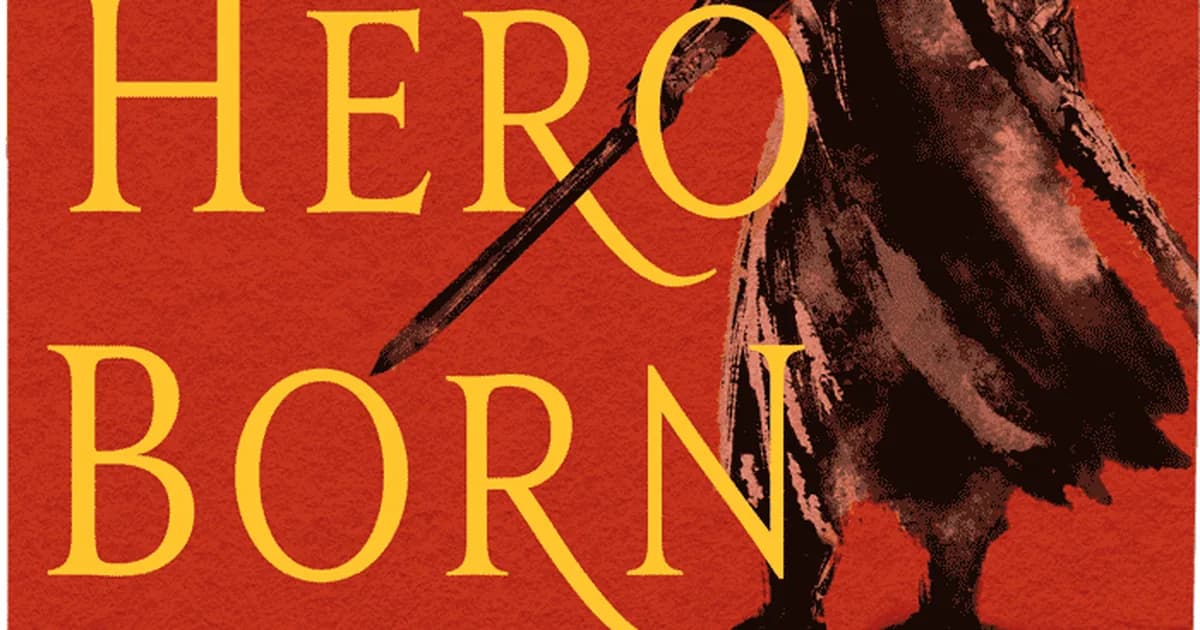
 Cover: A Hero Born, the official St. Martin's Press English edition of Jin Yong's first Legends of the Condor Heroes volume, translated by Anna Holmwood.
A Hero Born Shows What a Real Bridge Looks Like
There is a useful counterexample to the fatalism in that thread. St. Martin's Press publishes A Hero Born, Jin Yong's Legends of the Condor Heroes opening volume, in Anna Holmwood's English translation. The publisher's page identifies Jin Yong as the author, Holmwood as translator, and the book as the beginning of the English-facing series. That does not mean one edition solves access for every writer. It shows that English publication can preserve the proposition that wuxia is a book tradition worth meeting on its own terms.
For the future of wuxia, that is a practical standard: readers should be able to see who wrote the work, who translated it, and where the legal edition begins.
This is why the future of wuxia should not be reduced to a binary of pristine human translation versus machine text dumped online. A real bridge has stages: a source manuscript, a translator or translation draft, an editor with enough cultural and genre knowledge to notice what has gone wrong, a lawful edition, and a reader-facing frame that explains what the book is without flattening it.
The stages do not all have to be funded by the same person. A small author may need a co-operative, an editor who is also a bilingual reader, a rights-minded publisher, or a serial platform that makes an editorial partnership feasible. The lesson is not that every amateur draft deserves a price tag. It is that an author without US$3,000 in cash is facing a structural problem, not simply failing a taste test.
For the genre boundary that translation has to carry, read
Wuxia vs. Xianxia: What's the Difference? →
AI Is a Tool, Not a Finished Reading Experience
The strongest replies in the Reddit discussion did something more useful than declaring AI either pure harm or pure salvation. They separated AI used to generate an original English story from AI used as a first pass across a language barrier. Several readers said they would tolerate an assisted translation when the underlying work is original, especially if an editor catches literal idioms, strange register, and number errors.
That is a reader preference expressed in one thread, not a licence to call every machine-assisted text publishable. The future of wuxia has to be stricter than that. A literal translation of an idiom can turn a period voice into accidental comedy. A term of address can make a mentor sound like a coworker. A numerical convention can change the scale of an army or a debt. Those are not cosmetic errors when a story depends on social stakes.
Translation research describes this challenge as more than swapping words. A 2026 study of English popularization for Journey to the West argues that the translator's task also involves cultural knowledge, paratext, and choices about accessibility. Its subject is not wuxia, so it cannot tell us how to translate every jianghu scene. It does support the broader conclusion: circulation is built through a system around the prose as well as through the prose itself.
That system will shape the future of wuxia as much as any single translation engine does.
For a cash-poor writer, a responsible first step could be an openly labelled sample. Use an AI draft only as a draft, recruit a bilingual beta reader if possible, pay for a short human edit before a full release, and invite corrections rather than selling fluency the text does not have. This approach respects readers' time and gives a writer evidence about whether the work connects before making expensive promises.
The Future of Wuxia Needs Discovery
Even a strong edition can disappear if the English reader cannot find it. Search results often mix official listings, fan discussions, copied text, adaptation clips, and retail metadata. That makes the future of wuxia partly a discovery problem: readers need a route to a lawful edition and enough context to choose it.
Publishers can help with clear translator credit, a short explanation of the series order, content and setting notes, and a landing page that does not assume a reader already knows every romanized name. Readers can help by linking to official editions, naming translators alongside authors, and resisting the temptation to treat scraped or unauthorised copies as the genre's public library. Those are small actions, but they establish the conditions under which a translator's work can be seen and paid for.
The future of wuxia needs that visible credit because it lets a new reader follow the work back to the people responsible for it.
The poster's question therefore has a better answer than a comforting slogan. The Western jianghu is not “closed,” but the entry gate is uneven. A story with genuine local knowledge can still be made invisible by language, money, and discoverability. The answer is not to lower every standard. It is to build more than one legitimate path to meet it.
Want reader-vetted starting points once you've found a legitimate edition?
The Best Wuxia Novels in English →
What Readers, Writers, and Publishers Can Do Next
The future of wuxia benefits from different people doing different jobs well. That is less dramatic than a rescue fantasy, but it is how a culture's stories gain reliable readers in another language.
- Writers: label assisted translation honestly, share a carefully edited sample, and seek feedback on register and cultural references rather than only on plot.
- Translators and editors: make your role visible. A named translator and editor signal care, responsibility, and a route for readers to discuss choices constructively.
- Publishers and platforms: create smaller editorial on-ramps, such as paid sample edits, translator discovery, or revenue-share partnerships with clear rights terms.
- Readers: buy or borrow authorised editions when possible, credit translators in recommendations, and explain a dropped book without turning one rough paragraph into a judgement on a whole tradition.
- Critics and community moderators: distinguish a declared draft from deception. Readers deserve clear standards, while creators need feedback precise enough to improve the work.
None of this guarantees that every traditional wuxia novel will find a large audience. It does give good work a chance to arrive as work, rather than as a rumor about an inaccessible language. That is a much healthier test for the future of wuxia than asking whether the genre itself has expired.
Frequently Asked Questions
Is wuxia disappearing?
Wuxia has a long print, serial, and screen history. The sharper issue for English readers is which works receive careful, legal translation and sustained discovery.
What does translation change in wuxia?
It carries plot, voice, historical context, martial-arts terms, and social relationships into a new reading culture. Word-for-word substitution cannot do all of that alone.
Can AI help translate wuxia?
It can assist a workflow, but the thread discussed here and translation scholarship point to the need for human editorial judgement, especially around voice and culture-bound language.
What is an official English wuxia example?
A Hero Born, translated by Anna Holmwood, is an officially published English edition of the first Legends of the Condor Heroes volume.
Why does discoverability matter?
A book that has been translated still needs clear metadata, a lawful place to read or buy it, and readers who can find it without relying on copied uploads.
Related Reading
- The Best Wuxia Novels in English
- Wuxia vs. Xianxia: What's the Difference?
- What Is Murim? Korean Martial Arts Fiction Explained
- Web Novel vs. Light Novel
- Is Webnovel App Safe? What New Readers Should Know
- Double Agent of the Heavenly Demon Sect: Full Review
References
About the author

Senior Reviewer & Reading Guide Editor
Web novel reviewer and critic with a decade covering translated Chinese fiction, from fan-translation forums to official Webnovel.com releases. London-based.
- 10 years reviewing translated web fiction, official and fan-translated
- 600+ novels read to completion or a confident drop point
- Specializes in translation-quality and pacing assessment
- Tracks reading-order pitfalls in 1,000+ chapter novels
Keep reading

The Best Wuxia Novels in English (2026): 3 Real Picks
Novels · 8 min

Wuxia vs Xianxia Novels: What's the Real Difference?
Novels · 8 min

Murim vs Wuxia: The Difference Explained for Readers
Novels · 8 min

Is Murim Chinese or Korean? Origin and Genre Explained
Novels · 8 min

Best Xianxia Novels With Romance Worth Reading in 2026
Novels · 5 min

Web Novel vs Light Novel: A Reader's Practical Guide
Explainers · 5 min

Radiant Blade of the Wilderness Review: Mythic Fantasy
Novels · 8 min

Best Xuanhuan Novels in English (2026): Eight Picks
Novels · 10 min
Disclaimer
This article is published for informational and entertainment purposes. It does not constitute professional financial, legal, or technical advice. Series availability, platform access, translation status, and chapter counts change. Verify critical details (pricing, regional availability, official translation status) with publishers and platforms. Affiliate links, where present, help support our editorial work and are labelled in our affiliate disclosure.
Comments
Loading comments…