Loading…

NovelBrief · Guides
Lord of the Mysteries Reading Guide: Start at Chapter 1
This Lord of the Mysteries reading guide maps the 1,432-chapter Webnovel catalog, the chapter 214 checkpoint, and a spoiler-safe way to track pathways.
11 min readBy Mei-Lin Zhao
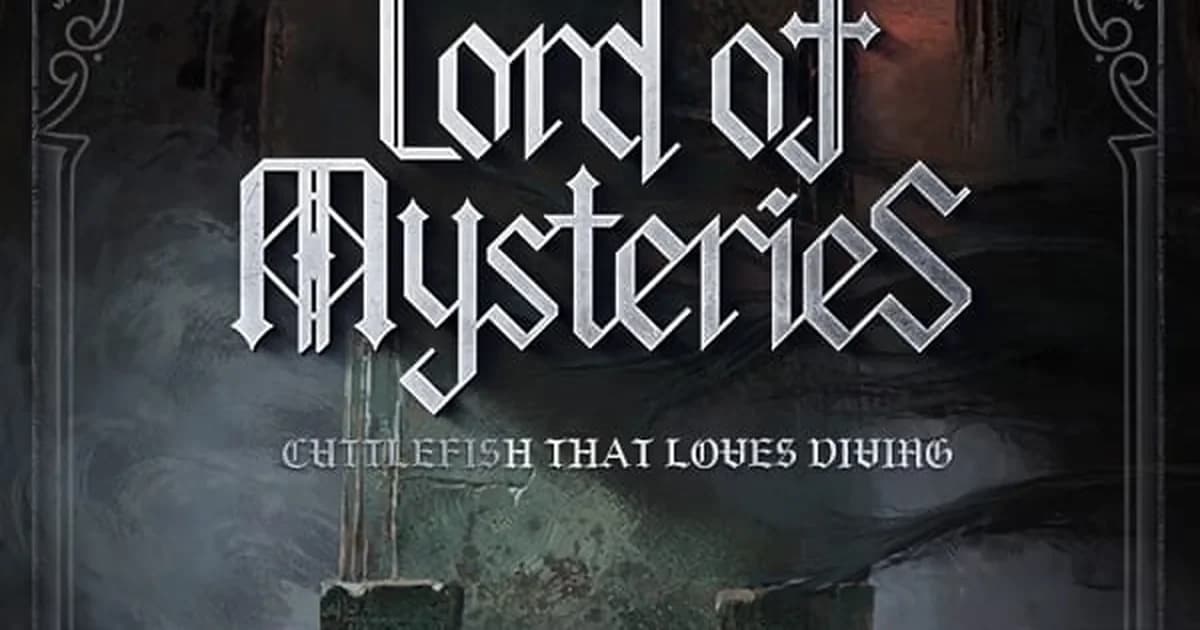
This Lord of the Mysteries reading guide is built around one useful boundary: start at chapter 1, then decide at chapter 214 whether the novel's method has earned your patience. The official Webnovel catalog lists the completed first story at 1,432 chapters, credits Cuttlefish That Loves Diving, and names CKtalon and AtlasStudios for the English translation and editing. The order is simple; the attention it asks for is not.
TL;DR: Start Lord of the Mysteries at chapter 1 and read the completed 1,432-chapter Webnovel catalog in order. Give the opening Tingen section through chapter 214 a fair test, track names and questions privately, and avoid pathway searches that can spoil the mystery.
Key Takeaways
- Use the official Webnovel catalog as the canonical sequence for the completed 1,432-chapter first story.
- Begin at chapter 1. There is no required prequel or adaptation jump point in the source review.
- Treat chapter 214, “Land of Hope,” as a useful first-volume checkpoint when Klein reaches Backlund.
- Track organizations and unanswered questions, not a complete power chart copied from a wiki.
- Read the first volume as investigation and world setup, not as a delayed action prologue.
Lord of the Mysteries Reading Guide: What This Covers
This is a navigation guide, not a rating. The review sibling explains why the series earns a 9.1/10 verdict; this page answers a different question: how should a new reader approach a completed 1,432-chapter mystery without treating its early restraint as a reason to skip ahead?
The opening is deliberately concrete. In the official second chapter, Zhou Mingrui wakes in Klein Moretti's injured body, checks a gas meter, cleans a room, and begins testing whether a ritual caused his transmigration. Those details are not side decoration. They teach you to treat an object, a routine, or a small inconsistency as evidence. A reader who starts by searching for a pathway chart misses the habit the novel wants to build first.
The source review also identifies the first 214 chapters as a distinct opening section. Chapter 214, “Land of Hope,” places Klein at Backlund railway station after the Tingen material. That gives you a clean checkpoint without pretending the genre changes overnight. You can use it to assess the reading experience, not to skip the work that made the transition meaningful.
 The guide reuses a clean crop of the official Webnovel cover from the review source.
Step-by-Step
1. Open the official catalog: Start with the Lord of Mysteries Webnovel catalog. Confirm the author credit, translator and editor credits, and the catalog's completed status before you save a bookmark. The interface may change, but those fields give you a reliable identity check.
2. Begin at chapter 1: Do not jump to Backlund, a pathway explanation, or the point where a recommendation says “the real story starts.” The first chapters establish Klein's household, the industrial city, the Nighthawks, and the rules for reading supernatural evidence. Let the novel teach you what deserves suspicion.
3. Keep three private columns: Write names, organizations, and questions in separate columns. Add only information you have already seen. This is enough to remember whether a term belongs to the Nighthawks, the Church, or an ordinary social setting without building a spoiler-heavy tier list.
4. Read through chapter 214 before judging the pace: Use chapter 214, “Land of Hope” as the first deliberate checkpoint. If the Tingen section's mix of routine, investigation, and delayed answers works for you, continue. If it does not, stopping there is a fair decision; you do not need to force 1,432 chapters.
5. Recheck terminology instead of searching spoilers: When a potion, pathway, or organization is unclear, reread the scene and your own notes before opening a complete guide. Search the official catalog's chapter title or a definition limited to the chapters you have reached. Mystery depends on information arriving at a particular time.
6. Continue in catalog order to the completed endpoint: After the Backlund checkpoint, keep moving through the numbered entries. Bonus chapters at the end are part of the catalog, but they are not a reason to skip the main numbered run. Save the final chapter number and title when you finish so your notes distinguish the first story from other works in the setting.
Why the First 214 Chapters Matter
People often describe a long novel's beginning as something to endure until the action arrives. That is not a useful reading instruction here. The first volume establishes the relationships and ordinary pressures that make supernatural danger legible. Rent, family, work, lamps, pipes, railways, and smoke are not filler around the mystery; they are the scale against which the strange becomes visible.
Chapter 130, “Backlund's Secret Gathering,” is another useful example. The official catalog entry gives the reader a named place to check terminology and social structure without turning the chapter into a plot summary. Use it as a note-taking checkpoint if you need one, not as a suggested jump point. The official chapter 2 listing performs the same function at the start: it shows how the novel converts a room and a gas meter into evidence.
The fair test is therefore chapter 1 through chapter 214. You are not promising to love every slow scene. You are testing whether you like a mystery that makes knowledge feel expensive. If you prefer immediate combat or a protagonist collecting powers in the first dozen chapters, the opening gives you enough information to make an honest choice.
For a different long Chinese serial whose opening rewards careful system tracking, compare Reverend Insanity's review without turning either book's pacing into a universal rule.
Lord of the Mysteries Reading Guide: Tracking Pathways Without Spoilers
Do not begin with a complete pathway chart. The names may look like harmless reference material, but a chart often reveals sequence, identity, or endpoint information that the story wants to stage as a discovery. Your first notes should stay small: who appeared, which organization they claimed, and what question remains unresolved.
When a term repeats, copy the spelling used by the official translation. Consistency matters because the same word can return after a long gap. The review source credits CKtalon and AtlasStudios as translators and editors, so the official edition gives you an accountable terminology baseline. If a fan post uses a different translation, record it as a variant rather than silently treating it as a separate canonical concept.
Keep a “known” page and a “questions” page. Move a question only when the text answers it. Do not fill the page from a wiki while you are still in Tingen. A blank space is a useful spoiler barrier.
Tips for a Long Mystery Read
- Read in sessions large enough to retain a scene's unanswered questions, even if that means fewer chapters per day.
- Save the chapter title and number, not only a browser bookmark.
- When you pause for a week, reread the last scene before searching for a recap.
- Mark an organization the first time it affects a choice; do not catalog every name that appears once.
- Use the official catalog's chapter boundary when comparing progress with another reader.
- Treat reader discussion as a report of experience, not as a spoiler-safe index.
The practical rule is to preserve uncertainty on purpose. If the novel has shown you that a phrase, ritual, or organization may matter later, do not resolve it with a search simply because the answer is available. A reading guide should make continuation easier without sanding off the reason the mystery is satisfying.
 Use the Backlund arrival as a checkpoint for your reading habits, not as a shortcut around Tingen.
If format labels are making your catalog choices harder, Web Novel vs. Light Novel separates the formats without treating one as automatically superior.
When to Stop, Continue, or Take a Break
Stop if the first-volume contract is actively unpleasant after chapter 214. A completed catalog removes abandonment risk, but it cannot make a 1,432-chapter book a match for every reader. Continue if you enjoy connecting ordinary details to later questions, even when the immediate scene is quiet. Take a break when your notes become a transcription exercise rather than a way to remember what you care about.
This approach keeps the choice practical. You are not required to prove that you can finish a famous web serial. You are deciding whether its investigation-first rhythm deserves more of your time. If it does, the rest of the catalog gives you a stable, numbered path. If it does not, chapter 214 has still done useful work by showing you the novel's method clearly.
Frequently Asked Questions
Where should I start Lord of the Mysteries?
Start at chapter 1 of the official Webnovel catalog. The first story is a completed 1,432-chapter serial and does not require a prequel before its opening chapter.
Is chapter 214 a good stopping point?
Yes. The source review identifies chapter 214, where Klein reaches Backlund, as the end of the opening Tingen section and a fair checkpoint for deciding whether the slow-burn method suits you.
Should I skip the first volume of Lord of the Mysteries?
No. The first volume establishes the setting, organizations, family pressures, and vocabulary that later mysteries use. Treat it as the book's first contract, not disposable setup.
How do I track pathways without spoilers?
Keep three private columns for names, organizations, and questions. Avoid searching complete pathway charts until you have finished the relevant section.
Who translated Lord of the Mysteries?
The official Webnovel catalog credits CKtalon and AtlasStudios for translation and editing.
Related Reading
- Lord of Mysteries Review
- Reverend Insanity Review
- What Is Xianxia?
- Web Novel vs. Light Novel
- Qidian Monthly Vote Ranking Explained
- Reverend Insanity Reading Guide
- My House of Horrors Reading Guide
- Lord of the Mysteries Sequences Explained
- Lord of the Mysteries Donghua vs Novel
References
Was this guide helpful?
About the author

Danmei & Genre Critic
Danmei and xianxia critic with a background in comparative literature, writing about Chinese web fiction in English since 2019. Toronto-based.
- Writing about danmei and xianxia in English since 2019
- Graduate background in comparative literature
- Tracks the fan-translation-to-official-license pipeline
- Follows Seven Seas' convention announcements directly
Keep reading

Lord of the Mysteries Sequences: Spoiler-Safe Guide
Guides · 11 min

My House of Horrors Reading Guide: Start With Chapter 1
Guides · 11 min

Reverend Insanity Reading Guide: Start Here, Finish Strong
Guides · 11 min

The Monk That Wanted To Renounce Asceticism Reading Guide
Guides · 11 min

Warlock of the Magus World Reading Guide: Start at Rank 1
Guides · 11 min

Last Gun Alchemist Reading Guide: Start Without Guesswork
Guides · 13 min
Medieval Times Manor Lord Reading Guide: Start the Estate
Guides · 13 min

Lord of Mysteries Review: Is 1,432 Chapters Worth It?
Reviews · 9 min
Disclaimer
This article is published for informational and entertainment purposes. It does not constitute professional financial, legal, or technical advice. Series availability, platform access, translation status, and chapter counts change. Verify critical details (pricing, regional availability, official translation status) with publishers and platforms. Affiliate links, where present, help support our editorial work and are labelled in our affiliate disclosure.
Comments
Loading comments…